
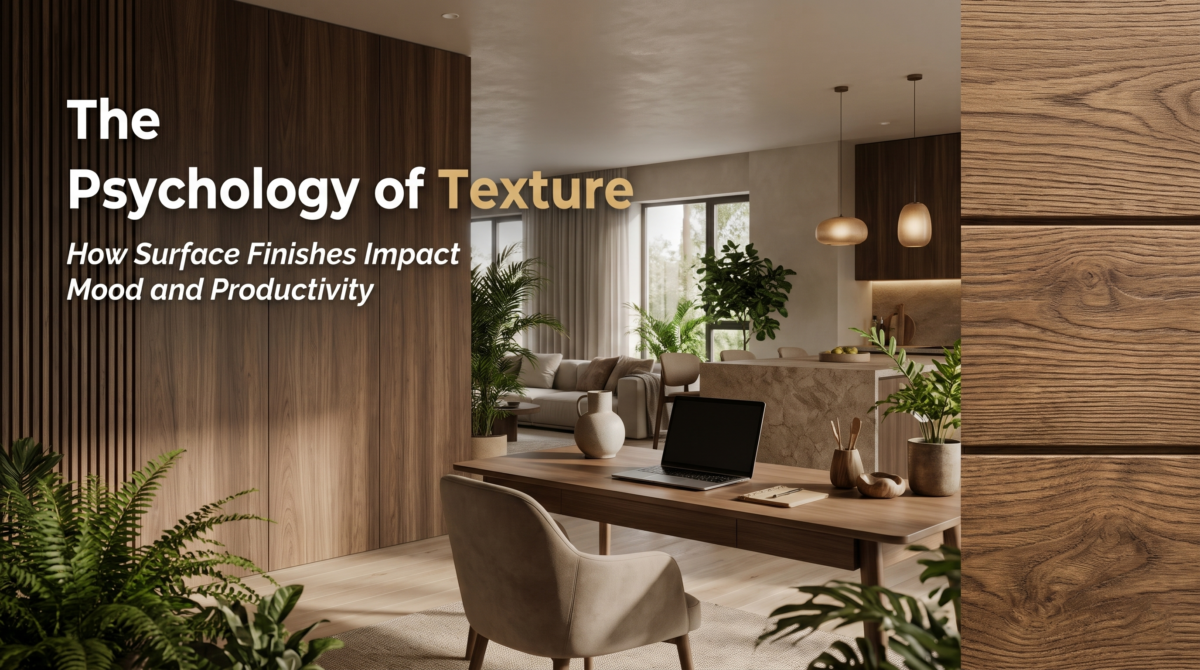
When we think about interior design, we often prioritize visual elements like color palettes, lighting, and spatial layouts. However, the psychological impact of our environment extends far beyond what we simply see. Modern architectural psychology reveals that the physical textures and surface finishes we interact with daily profoundly influence our emotional state, stress levels, and cognitive focus. As the concept of wellness-centric design gains global momentum, interior designers are intentionally selecting materials not just for their aesthetic appeal, but for their ability to actively shape human behavior and mental well-being.
The Calming Power of Natural Woodgrains
Humans possess an innate, biological connection to nature, a psychological concept known as biophilia. Incorporating natural textures into indoor spaces has been shown to lower cortisol levels, reduce heart rates, and promote a general sense of peace. Engineered surfaces that replicate the sweeping, organic grain patterns of natural timber introduce a comforting visual rhythm to a room. When applied to bedroom wardrobes, living room feature walls, or reading nooks, the tactile warmth of a rich walnut or pale oak finish signals the brain to relax. These woodgrain textures effortlessly transform high-stress environments into restorative, tranquil sanctuaries while completely bypassing the intensive maintenance required by actual wood.
Focus and Clarity Through Matte Surfaces
Just as a cluttered desk can lead to a cluttered mind, highly reflective and glossy surfaces can create subtle visual noise that disrupts concentration. In spaces dedicated to productivity, such as home offices or creative studios, controlling light reflection is essential for sustaining focus. Smooth, ultra-matte laminates absorb light rather than aggressively bouncing it around the room, effectively eliminating harsh glares and reducing visual fatigue. Surfacing your workspace cabinetry and desks with these sleek, low-reflection finishes creates a quiet, distraction-free backdrop that enhances cognitive clarity, allowing you to remain deeply focused on the task at hand.
The Grounding Effect of Earthy Textures
Surfaces that mimic heavy, foundational materials like stone, concrete, and marble evoke a psychological sense of permanence and stability. In transitional areas or bustling family kitchens, these tactile finishes provide an essential grounding effect. The subtle, nuanced aesthetic of a stone-finish laminate offers a robust, earthy energy that makes a space feel secure and anchored. By integrating these solid, natural-feeling textures into your kitchen islands or bathroom vanities, you establish a beautifully balanced environment that feels protective and enduring, helping to counteract the fast-paced, chaotic nature of modern daily life.
Designing for Emotional Well-Being
Ultimately, crafting a healthy home requires moving beyond superficial decorating trends and embracing a highly intentional approach to the materials that surround you. Every surface you choose plays a quiet but powerful role in orchestrating the daily mood of your household. By thoughtfully combining the relaxing warmth of woodgrains, the focused clarity of matte finishes, and the grounding stability of stone textures, you can engineer an environment that actively supports your mental health and daily routines. Explore the diverse range of premium engineered surfaces at Durian Laminates to discover the perfect textures for crafting a beautifully balanced, wellness-driven space.
No Comments